One of the most common questions we receive at 3D Printing Uganda is: “Which material should I use for my project?” With numerous resin options available, each with unique properties and applications, making the right choice is crucial for project success.
This guide will help you understand the different materials we offer and how to select the perfect one for your specific needs.
Understanding Resin 3D Printing Materials
Unlike traditional plastic filament 3D printing, resin printing uses liquid photopolymers that cure when exposed to UV light. This process allows for exceptional detail and smooth surface finishes, but material selection becomes even more critical since the final properties depend heavily on the specific resin formulation.
Standard Resins: The Versatile Foundation
Best for: Prototypes, display models, concept validation, artistic pieces
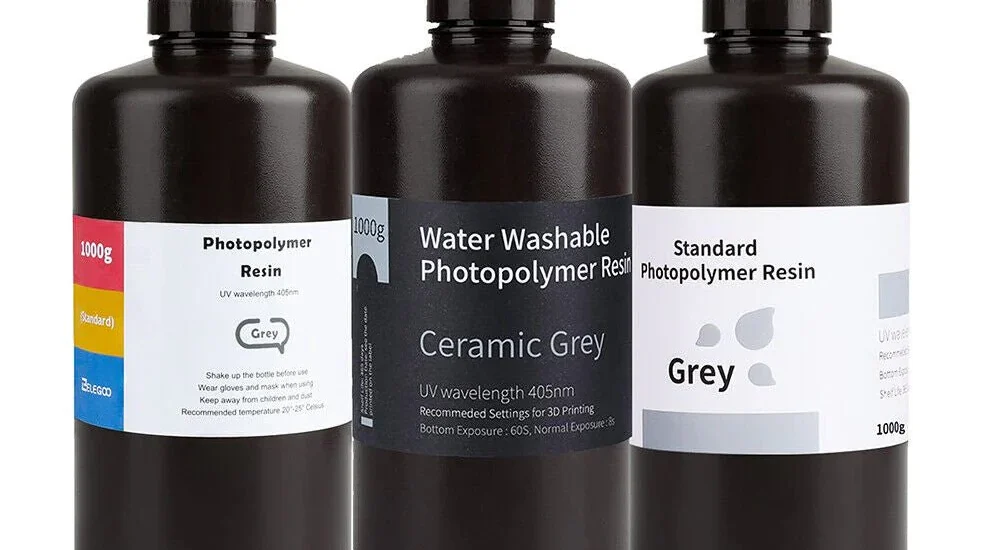
Standard resins are our most popular choice for good reason. They offer excellent detail reproduction, smooth surface finish, and are available in multiple colors. These materials are perfect when you need to see how your design looks and feels but don’t require extreme durability.
Properties:
- High detail resolution (0.01mm layers possible)
- Smooth surface finish
- Moderate strength and flexibility
- Easy post-processing
- Cost-effective
Real-world example: A local architect uses standard resin for building models presented to clients. The material captures intricate architectural details beautifully and can be painted to match the proposed building materials.
Engineering Resins: When Function Matters
Best for: Functional prototypes, mechanical parts, end-use components, testing applications
When your 3D printed part needs to actually work under stress, engineering resins are the answer. These materials offer significantly higher strength, better chemical resistance, and improved durability compared to standard resins.
Properties:
- High tensile strength (50-80 MPa typical)
- Excellent chemical resistance
- Temperature resistance up to 100°C
- Good long-term stability
- Higher precision retention under load
Real-world example: We recently produced custom brackets for a solar panel installation. The parts needed to withstand UV exposure, temperature cycling, and mechanical stress. Engineering resin provided the durability required while allowing for complex geometries impossible with traditional manufacturing.
Flexible Resins: Rubber-Like Performance
Best for: Gaskets, phone cases, wearable items, impact-resistant parts
Sometimes rigid isn’t right. Flexible resins cure to a rubber-like consistency that can bend, compress, and stretch while maintaining structural integrity.
Properties:
- Shore A hardness of 40-95 (depending on formulation)
- Excellent impact resistance
- Good chemical resistance
- Comfortable skin contact
- Fatigue resistant
Real-world example: A local entrepreneur developing phone accessories uses flexible resin for protective cases. The material provides excellent drop protection while allowing for precise fit around buttons and ports.
Castable Resins: The Bridge to Metal
Best for: Jewelry prototypes, investment casting, dental applications, small metal parts
Castable resins are specially formulated to burn out cleanly during investment casting processes, leaving no ash residue. This makes them perfect for creating metal parts through traditional casting methods.
Properties:
- Clean burnout (less than 0.003% ash)
- High detail reproduction
- Smooth surface finish
- Compatible with all casting alloys
- Excellent dimensional accuracy
Real-world example: Kampala jewelry designers use castable resin to create intricate ring and pendant designs. The 3D printed masters are then used in lost-wax casting to produce final gold and silver pieces with details impossible to achieve by hand.
Bio-Compatible Resins: Safety First
Best for: Medical devices, dental applications, skin-contact items, food-safe applications
When parts will come into contact with the human body, bio-compatible resins provide the safety assurance you need. These materials are tested and certified to meet medical-grade standards.
Properties:
- FDA approved for skin contact
- Cytotoxicity tested
- Chemical resistance
- Sterilization compatible
- Long-term stability
Real-world example: We’ve worked with dental professionals to create custom surgical guides and temporary crowns. The bio-compatible material ensures patient safety while providing the precision needed for successful procedures.
Material Selection Decision Tree
To help you choose the right material, ask yourself these questions:
1. What is the primary function?
- Display/visualization → Standard resin
- Mechanical function → Engineering resin
- Flexibility required → Flexible resin
- Will be cast in metal → Castable resin
- Body contact → Bio-compatible resin
2. What environmental conditions will it face?
- Indoor, protected → Standard resin
- Outdoor, chemicals, heat → Engineering resin
- Impact, bending → Flexible resin
3. What’s your budget?
- Cost-sensitive → Standard resin
- Performance critical → Engineering/specialty resins
4. What post-processing is planned?
- Painting/finishing → Standard resin
- Minimal processing → Engineering resin
- Metal casting → Castable resin
Expert Tips for Material Selection
Consider the application environment: A part that works perfectly indoors might fail outdoors due to UV exposure or temperature cycling.
Think about the full lifecycle: How will the part be used over time? Will it see repeated stress, chemical exposure, or wear?
Don’t over-engineer: Sometimes standard resin is perfectly adequate. Using expensive materials unnecessarily increases costs without adding value.
Test when uncertain: For critical applications, consider printing test pieces in different materials to evaluate performance.
Consider post-processing: Some materials are easier to sand, drill, or paint than others.
Working with Our Team
Still not sure which material is right for your project? That’s exactly why we offer consultation as part of our service. When you submit a quote request, include details about:
- How the part will be used
- Environmental conditions it will face
- Strength requirements
- Surface finish needs
- Budget considerations
Our team will recommend the optimal material based on your specific requirements and our experience with similar applications.
Remember, choosing the right material is just as important as having a good design. The best 3D printed part is one where material properties, design requirements, and application needs all align perfectly.